


Torrevieja's beaches and bays

Torrevieja is a relatively young city, but is the third largest in the Alicante province. Traditionally, the city's inhabitants have lived from fishing and salt production, but in recent decades tourism and the service industry have been dominant. Torrevieja is a popular tourist destination, not least for Norwegians and Swedes. This post describes beaches and bays where you can swim in Torrevieja.

Torrevieja has a coastline of 20 km. Here you will find over 20 bays and cliffs to swim from, in addition to several large sandy beaches. It can be nice to have more options to choose from, especially in high season. Although population growth has stagnated in recent years, it increased from 12,000 to 90,000 in the period from 1981 to 2011. In 2025 there were 106,000 inhabitants, but in high season there are 500,000, and then there is great pressure on popular open spaces. In order to make the coastline more accessible, a lot of work has been done to connect beaches and bays with beach promenades. It is therefore relatively easy to get down to many of them. If you do not like lying on a crowded beach or would rather avoid sandy beaches, it is recommended to visit one of the many bays where you can often find a small ledge or a rock for yourself.
Playa la Mata
If we start in the northeast and go southwest, Playa la Mata is the first beach we come to. It is a 2.3 km long beach with fine sand that has all the necessary facilities such as a lifeguard, a promenade, a foot shower, sunbeds and parasols for rent, restaurants and bars. It is shallow and child-friendly and has a blue flag as proof of high environmental standards. There is a relatively large parking lot approximately in the middle of the beach, and it is also possible to park along the roads in the residential areas, but in high season you should get there early because the spaces fill up quickly. You can also get to the beach via Parque del Molino del Agua.


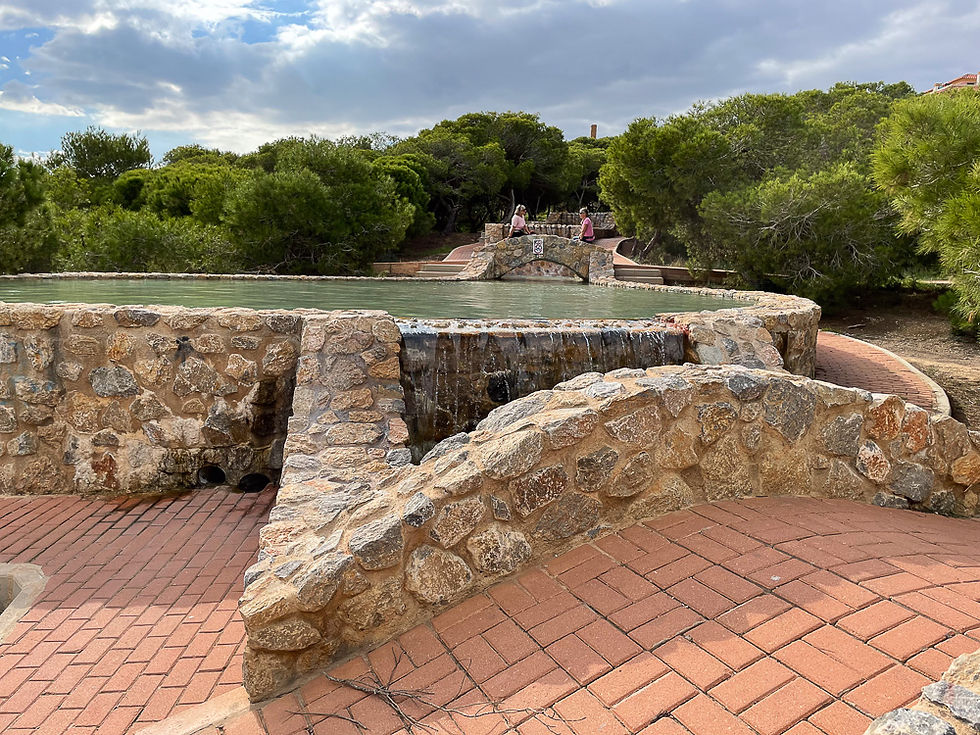


After Playa de la Mata we come to several coves. The first is Cala Cabo Cervera which is a 50-meter wide cove with a small promenade and access for the disabled. Then comes Cala del Mojón which also has access for the disabled. Then comes Cala de la Zorra which has a 50-meter long beach with gravel and rocks. Finally, just before entering the town, you come to Playa de la Higuera which has many of the same characteristics as Cala de la Zorra. In addition to these, there are several coves that are not so easy to swim from, but are popular for snorkeling and fishing. They look very similar. Below are pictures from some of them to give an impression of the nature.


Playa de los Locos
This is one of the most popular beaches in Torrevieja. It is 760 metres long and 25 metres wide and has fine sand with some areas of rocks. It is shallow and child-friendly and has many facilities such as lifeguards, sunbed and parasol hire, foot showers, restaurants and a promenade. It has a Blue Flag as proof of its high environmental standards. It is located at the north-eastern entrance to the town. There are some car parks nearby, but in high season it is best to get there by other means than by car. The name means "beach of the mad" and comes from the time when the large red building at the north-eastern end was a psychiatric hospital, el Sanatorio de Carmen. It was originally called Playa del Salaret.


Playa de la Cura
Only separated by a small cove called Cala Palangre with a 20-metre long and 5-metre wide shoreline with wheelchair access, is Playa de la Cura. This is the closest to the city centre and most visited beach in Torrevieja. It is 325 metres long and 27 metres wide and has fine sand. It is shallow and child-friendly, and as it is located in a bay, it is sheltered from waves and wind. Its name comes from an incident where a priest drowned here. After this, it was given the name "priest's beach" Playa de la Cura. It has a blue flag certification as proof that it has high environmental standards. It also has all the other facilities you need such as a lifeguard, sunbed and parasol hire, foot showers, restaurants and a promenade. This beach is so popular that it fills up quickly. You should therefore either arrive early, or come at the hottest time during lunchtime to get a place. Parking nearby is not easy.


Playa de El Acequión
The next beach on the route is Playa de El Acequión, which is located next to the marina and is protected by the port's breakwaters. It is shallow with calm water without currents and is therefore well suited for families with small children. The beach is 900 meters long and 25 meters wide and has fine-grained sand. It has sunbeds and parasols for hire, a promenade, foot showers, wheelchair access and a number of restaurants. Its name comes from the fact that at one end there is a channel where the water is directed between the sea and the salt lakes a few kilometers further inland. Despite the fact that the beach is very popular, it does not have a lifeguard or its own toilets. To go to the toilet, you must therefore either use the public toilets on the neighboring beach Playa de los Náufragos or visit one of the many restaurants in the area. The beach is popular and often full. Parking in the area is difficult, but there is a car park on the neighboring beach. The beach is kept clean and tidy in high season, but just as well off season.

Playa de los Náufragos
This beach is located right after Playa de El Acequión, separated only by the road to the marina. It is located on the south side of the harbor at the southern entrance to the city. It is 600 meters long, shallow and child-friendly with fine-grained sand. It has a blue flag as proof of high environmental standards and has all the necessary facilities such as toilets, rental of sun loungers and parasols, foot showers and restaurants. There is a relatively large parking lot nearby. The name means "The Shipwrecked Beach" which tells its story of what it was like to be a fisherman here in former times. Before the pier and breakwaters were built, the area was very exposed to storms, and there have been at least 22 shipwrecks right off the beach.


In addition to the beaches listed here, it can be mentioned that both Cabo Cervera and Cala Piteras have blue flags as proof of high environmental standards. Cala Ferris must also be mentioned. It is a small natural oasis of 200 meters with sand dunes surrounded by palm trees and cliffs. It is located a little outside the city of Torrevieja, just on the border with Orihuela Costa. Since the beach is protected, seaweed and sea plants are not removed. This is therefore a beach for those who want a nature experience and who want to escape the crowds on the beaches closer to the center.
More excursions: www.turideer.com
Excursion of the week: Torrevieja's beaches and bays
Good for: Whether you want to sunbathe and swim or just stroll along the coast, Torrevieja's beaches and coves are a good choice. Here you can walk along the promenades along most of the coastline.


Comments