


Tjurpannan nature reserve in Grebbestad - rehabilitation of heather areas - increased biodiversity - Grace project - nature restoration - rewilding

During the latter half of the last century, parts of the heather areas in the Tjurpannan nature reserve in Grebbestad municipality on the west coast of Sweden had grown back with shrubs and trees. In 2012, 2013 and 2014, a Grace project was carried out to recreate the nature that centuries of grazing had created. Trees were cut down and shrubs and other vegetation were burned. New life came from the burned area. Ten years later, much of the biodiversity has returned.

Tjurpannan has been a nature reserve since 1968. It belongs to the EU Natura 2000 network and is classified as an area in need of special protection and conservation due to its unique and vulnerable nature. Tjurpannan is also a popular place for hiking and recreation. These two needs have been combined by creating marked hiking trails that make it possible to walk safely on rough terrain and dry-shod through wetland areas without damaging the nature.

During the last half of the 20th century, the nature of Tjurpannan gradually changed its character. In several places, bushes and trees grew, the trees turned into small forests, and in some places the open plains became dark and uninhabitable for heather and plants. In order to preserve the unique nature of the area, it was decided to take measures against these changes. Over the course of three years, 2012, 2013 and 2014, trees and larger bushes were successively removed and what remained of vegetation was burned down. The aim was that this would recreate the open plains and ensure that the original nature could take over.

The nature restoration work in Tjurpannan was a Grace project and took place in collaboration between the Swedish Environmental Protection Agency, the organization LIFE, the County Administrative Board of Vestra Götalands Län and Natura 2000. The Grace project is an EU initiative that aims to preserve and recreate so-called semi-natural habitats in all countries that are part of the Natura 2000 network. Semi-natural habitats are natural areas that have had rocky and nutrient-poor soil and too shallow a soil depth to be able to use agricultural machinery on them. As a result, agriculture has become much gentler by instead utilizing nature for outfield grazing.

Over the centuries, grazing animals have shaped the nature in these places. They have grazed away bushes, kept trees down and created a sunny and open terrain that has made room for heather and plants, which in turn have attracted insects and insect-eating birds. In the semi-natural habitats, a balanced biodiversity was created with a wealth of species of both animals, birds, insects, and plants.
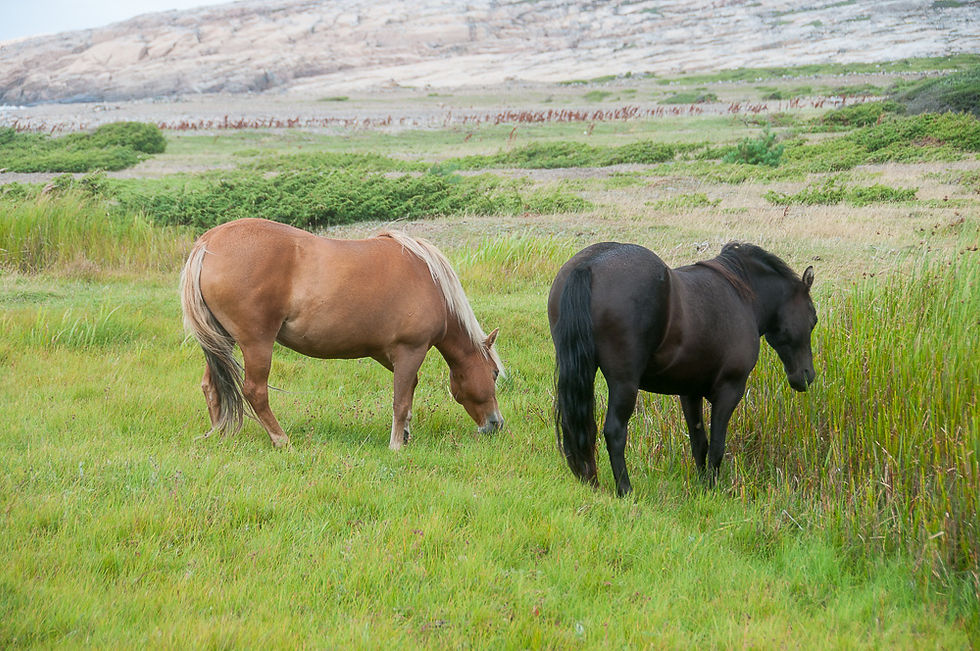
However, changes in agriculture in recent decades have led to fewer grazing animals. This has created a vicious circle where less grazing has led to more forest and shrubs, which has given less space to heather and plants, which in turn has led to less biodiversity, which has provided even poorer conditions for grazing animals.

The Grace project aims to rehabilitate such natural areas and return them to their original semi-natural state. However, the areas that are part of the Grace project's area of responsibility have in common that they are dependent on grazing animals to maintain them. Therefore, nature restoration is not enough. The projects also depend on good cooperation with landowners and farmers so that there are enough grazing animals to maintain the results of the restoration.

The Grace projects are part of the Natura 2000 instruments. The Natura 2000 network is an environmental network and a project in which all EU countries participate. The network has two sub-projects that work together: one to identify areas that require special protection and the other to identify areas that need stronger protection: 1) Special Area of Conservation (SAC) - and 2) Special Protection Area (SPA). The work in Natura 2000 has been successful. Natura 2000 now protects 18 percent of the land areas in EU countries.

The other Nordic countries that are members of the EU have done considerable work. Denmark, for example, has designated 254 habitat areas to be protected and preserved, in addition to 113 bird protection areas and 27 Ramsar sites (protection of wetlands). In Sweden, the Norwegian Nature Conservation Agency has made similar efforts, and the nature restoration in Tjurpannan is part of this. Norway chose not to incorporate the EU directives on nature management into the EEA Agreement and has not participated in the Grace project. Norwegian authorities have signaled that they want to develop environmental work in the direction of what the EU has done, but so far little has happened, and Norway is lagging far behind.

The Grace project in Tjurpannan has been successful. Insect populations have increased, new plants that have not been there for decades have returned, and grazing animals are able to keep new growth of shrubs and trees at bay. Traces of stumps can still be seen where there used to be trees and forest, but they will rot and provide habitat for insects that will provide food for birds. It will still take time, but already there are obvious signs that the old ecological balance in the semi-natural nature will be restored if nature is given a little time.


The nature in Tjurpannan Nature Reserve is unique and beautiful. It is one of the most weather-exposed areas on Sweden's west coast. Storms and reefs have claimed both boats and lives here for hundreds of years. There is no protective archipelago off the coast of Tjurpannan. Here lies the infamous Gula Humpen, a stretch of coast that gives sailors the shivers. But on land, the flat, open terrain with smooth-cut rocky cliffs and low vegetation with heather heaths provides a nice and peaceful nature experience.


Some may wonder why we are rehabilitating semi-natural areas. These are areas that human activity has changed over time. Why shouldn't nature be allowed to reclaim these areas when we no longer use them for agriculture? But what is natural here? The plain landscape in such areas has had its own ecological balance with great biodiversity for many centuries. Before agriculture, perhaps other grazing animals kept the vegetation down. Letting these areas grow back will significantly reduce biodiversity. In addition, we will lose this distinctive landscape and the story it tells. The Grace project in Tjurpannan Nature Reserve has succeeded in increasing biodiversity and recreating the old landscape. We can enjoy that when we walk around on paths and rocky cliffs.
More articles about nature restoration and excursions to nature reserves: www.turideer.com Select the topic node "Rewilding" for nature restoration and rewilding.
This week's excursion: Tjurpannan nature reserve in Grebbestad with the Grace project's rehabilitation of heather areas.
Suitable for: Everyone. You can use a wheelchair or stroller on the gravel roads, but not on the trails.
How to get there: Enter "Tjurpannan nature reserve" in Google Maps. This will take you to the parking lot at the entrance to the nature reserve. There are signs to the marked trails. If you want to walk, you can follow the gravel road from the parking lot down to the lake.


状态那几个词要认得,Struck Off 和 In Liquidation 都是停手信号。文章里解释了。