


Ruta 99 - Carrícola and Sempere - small villages threatened by eviction

Ruta 99 is an initiative by the Valencian government to help villages threatened by eviction that have fewer than 100 inhabitants. A list of 20 villages has been drawn up to visit. In these peaceful, small villages, there are few traces of tourism, time passes slowly, and much remains as it always has been. This post describes two of them: the art and ecology town of Carrícola and the sleepy town of Sempere - two very different villages.

Route 99 is designed so that 2-4 villages are located so close to each other that it should be possible to visit several of them during one day's excursion. In a previous post, the villages of Benillup, Benimassot, Tollos and Famorca, which are located a little further south, are described (https://www.turideer.com/post/ruta-99-rundtur-til-små-fjellandsbyer-i-alicanteprovinsen-benillup-benimassot-tollos-og-fomarc).

This post describes two small villages that have had completely different strategies to face the threat of eviction. Carrícola has invested in ecotourism, has filled the city streets and surroundings with artwork and appears as a large outdoor art museum that is definitely worth a visit. On the other hand, it is difficult to see what strategy Sempere has had. But we will start with Carrícola.

Carrícola was originally a Muslim village with a maximum of 56 houses. After King James I the Conqueror expelled the Muslims from the area, he first gave the village and castle to Berenguela Alonso in 1270, but only three years later he transferred it to the Bishop of Valencia. In modern times, democratic elections for mayor have been held since 1979. The municipality currently has an area of 4.6 square kilometers and 99 inhabitants. Since it is located on the north side of the Sierra de Benicadell at about 800 meters above sea level, the area has a typical inland mountain climate with cold, humid and windy winters - and hot and dry summers.

The inhabitants have traditionally made their living from agriculture. Since there is little rainfall in the summer months, olives, almonds and carob are mostly grown, so-called dry farming. The village was an early adopter of organic production and found a profitable niche in the market for this already in the 1980s. Today, organic farming, organic gastronomy and sustainable production in general are important industries that have provided the basis for tourism. As a result, the village has several accommodations and restaurants.


The village consists of a cluster of houses on both sides of the CV-615 thoroughfare that runs from Albaida to Otos. It has one main street that runs from Plaza de la Constitución down to the farmlands of the plain below. Along this street you will find the town hall, bars, a hotel, a swimming pool and a church, as well as residential houses. There are a few private cars, but what stands out the most is the silence, peace and harmony. It is a place where people have time to chat and where you can relax.


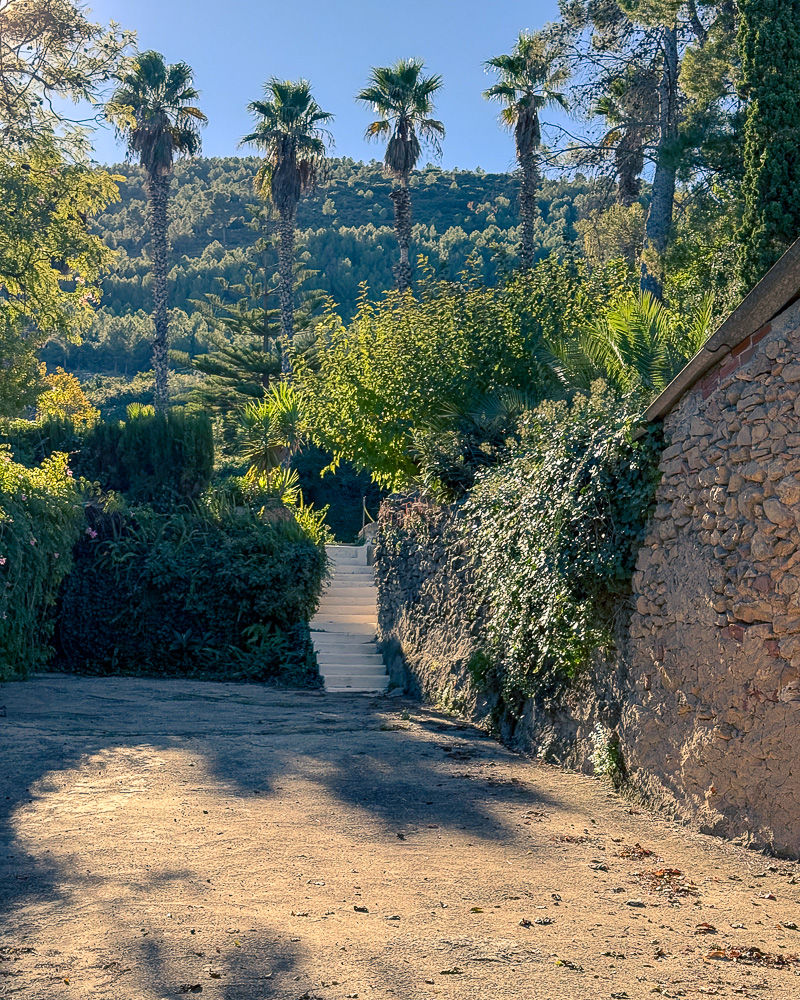


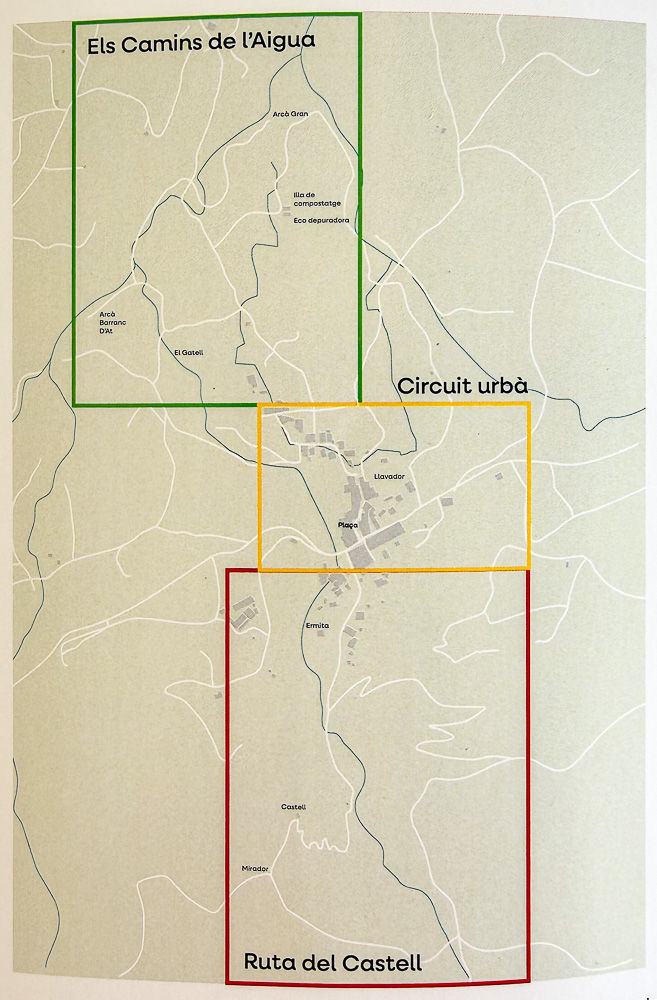
In 2010, the Biodivers initiative led to the installation of 70 works of art around the village and the surrounding countryside. More than a hundred national, local and international artists took part in the work. Three routes were created on which the works of art are installed. One runs through the village itself - Ruta Urba. The second runs along the riverbeds - Ruta de la Agua, and the third runs through the forest up to the castle - Ruta del Castillo. This makes Carrícola a large outdoor art museum. You can see the art by walking around at random, but maps have also been created describing the three routes and lists with information about the individual works of art. You can buy a brochure with this information for 1 Euro at the town hall when it is open, but you can also find a copy of the map and lists at the end of this article. The pictures below show some of the works of art.


In addition to these three routes, there are several good routes for hiking in the nearby mountainous areas. The next village is Sempere. It is 16 km away, about 22 minutes drive.

Sempere is the smallest village in the Valencian Community. It is located on a plain surrounded by olive groves. In 2024, it had 29 inhabitants, all over 70 years old. The name Sempere is an old Valencian word for a property or farm in the countryside. It was originally a Muslim settlement that was taken over by the Christian family Núñez Núñez when the Muslims were expelled from the country. For centuries, the village was known for its excellent pottery. The main attraction is the church Iglesia Parroquial de San Pedro, which was built between 1794 and 1814. Restoration work is underway to open up the view from the church square to the large artificial lake below. Remains of the portal of the Núñez Palace, which burned down in 1899, have also been preserved. The old town of Sempere consists of buildings from the eighteenth century.
However, the first thing that meets us when we arrive in the small village of Sempere are houses that are falling apart. Several of the houses are in poor condition and uninhabited. The village has only one street, Carrer San Pedro, which is just over 100 meters long. Along this street there are several well-maintained houses.


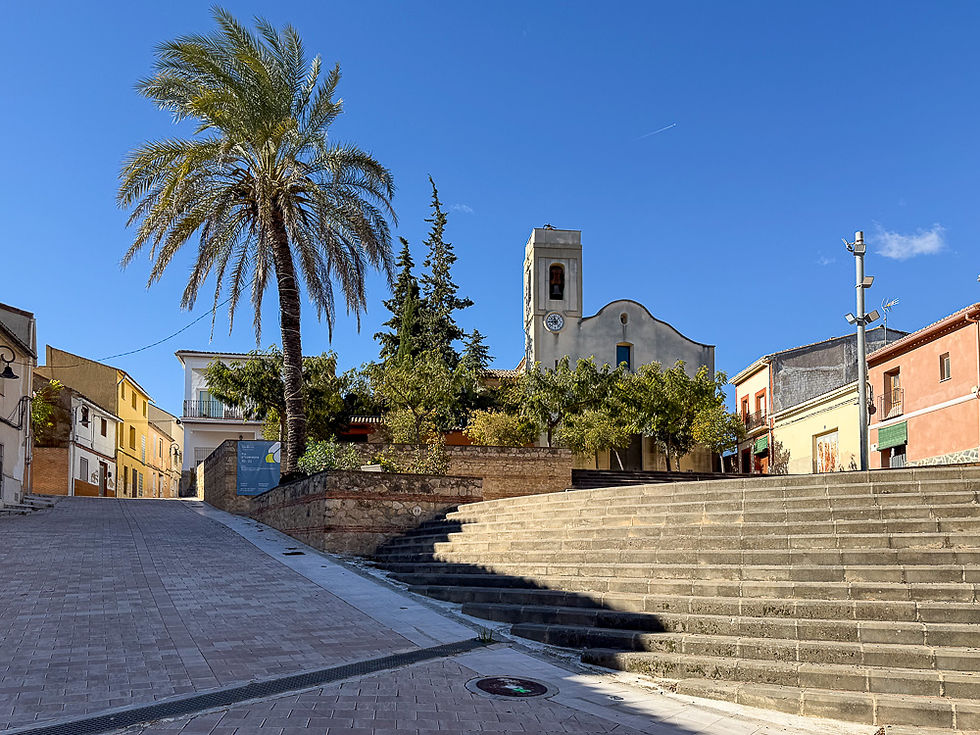


The picture above shows one of the many houses that are in a very poor condition. As a visitor, it is difficult to see how the management of Sempere intends to face the future. There are no shops, bars or restaurants here. The work being carried out to open up the view of the large pond below could make the area more beautiful, but without a bar or restaurant, this will not be enough to attract tourists. As it is now, the village appears to be just a collection of houses, but if you don't get younger people to take over, it must be very difficult to avoid total eviction. But for visitors, it is impressive to see that such a small village can have its own town hall and a large and beautiful church.
More excursions: www.turideer.com
Excursion of the week: Ruta 99 - Carrícola and Sempere - two small villages on the list of villages threatened with eviction in the Valencia region.
Below you will find maps and lists of artworks in Carrícola.


Comments