


Nasjonalmuseet i Oslo - The National Museum in Oslo - art, architecture, design - long planned and much debated - spans a wide range

When the new National Museum opened on June 11, 2022 after a long construction process, many were happy, but also some were disappointed. The building is located behind the old Vestbanes Station at Aker Brygge in Oslo. It has a modern architecture with many straight lines and large surfaces without ornamentation. This post presents the building, the discussions and some of the artworks.

The National Museum was established in 2003 when the four museums, the Museum of Architecture, the Museum of Industrial Art, the Museum of Contemporary Art and the National Gallery with National Exhibitions, were merged. All four museums had long wanted larger premises, and architectural competitions had been held in both 1972 and 1995 to see if it would be possible to expand the premises at Tullinløkka. Since this had not been successful, it was decided in 2003 that the museums would be moved to a new building with a larger total exhibition area than the four museums had had until now.

After several years of studies and discussions, the Government decided in 2008 that the building would be built on the site of the disused Vestbanen (train line). Following an architectural competition and preliminary design, construction began in 2013 with a cost of NOK 6 billion. The building was to be completed in 2019, but the opening was postponed to 2022 due to the pandemic and delays in the construction project. The new National Museum was given an exhibition area of 13,000 square meters spread over three floors and 90 rooms. This has made it possible to exhibit 6,500 of the museum's collections of 400,000 objects, or 1.6 percent.

The new building received both praise and criticism when it was opened. Those responsible for the building emphasized that the building was functional, that fine and expensive materials of high quality had been chosen, that it was nice inside, and above all that there was more space to display art. Critics claimed that the building was compact and boring, that it looked like a big brick, and that it did not fit into the surrounding environment. The museum was also criticized for having given too little space to the collection of older paintings and too much space to modern art and to the museum's other purposes.
Architecture is subjective. The series of images below show the building so that you can form your own opinion about what you think. An interesting detail when you are inside the building is that in some places you can see sculptures through windows to the outside.



This is a large museum. It is actually the largest art museum in the Nordic countries, and therefore it takes a long time to go through all the halls. But it is necessary to go through everything before you form an opinion. If you start at the bottom and work your way up, it is easy for a while to understand the criticism that a lot of space has been given to other than traditional painting. But when you eventually get to the large section for traditional painting, some of the basis for the criticism disappears. There is a lot of space for this too.


If you have lived in the Oslo area for a few decades, remember the National Gallery from the time at Tullinløkka and expect the new National Museum to be a National Gallery XL, you will be disappointed. However, if you consider that the National Museum consists of four museums that have been merged, you can open your eyes to other qualities of the museum. As a tourist, you will appreciate the great variety. Here there is such a wide range of expressions and forms of presentation that it never gets boring to walk around the many rooms. You will also enjoy the light and the lighting and the feeling of quality. The pictures below show some of the diversity of artistic expression and the quality of the exhibition rooms. There is room to give large installations room to breathe - and intimacy to artworks that benefit from it.


As with all large museums, it is a good idea to plan your visit. When you buy your ticket, take a brochure with you and spend a few minutes picking out the parts of the museum that interest you most. The numbering of the rooms can be confusing, and if you just start somewhere and think you will see everything by walking from one end of the building to the other, you may miss a lot. A good tip is to follow the numbering of the rooms carefully. The pictures below show some of the iconic paintings on display.


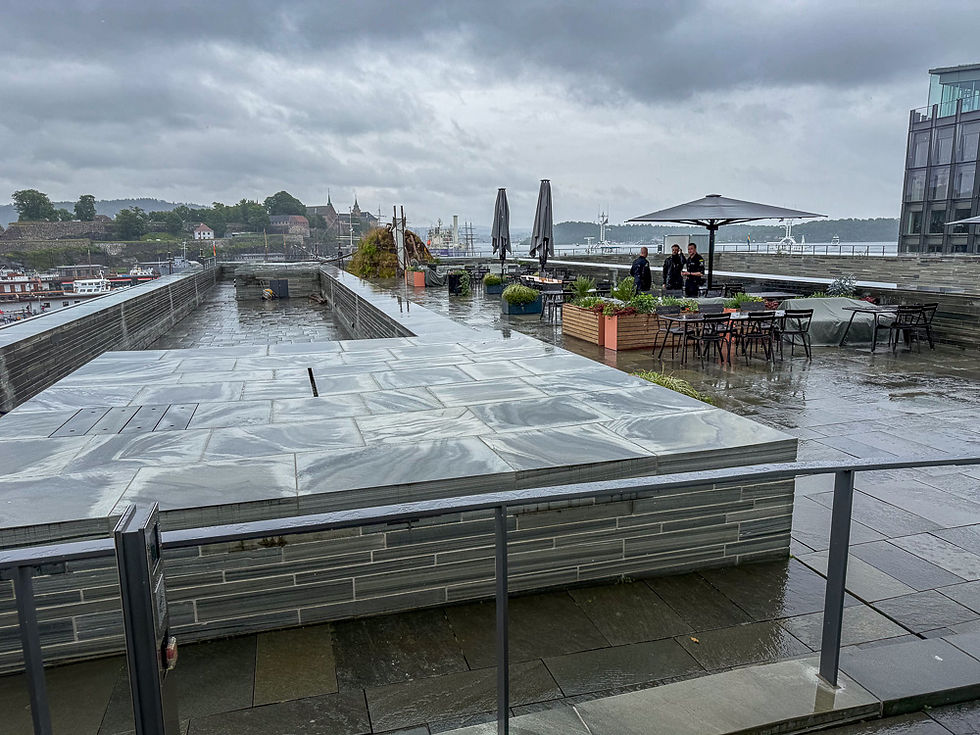
The building has three floors. On the first floor you will find design and crafts from ancient times to the present day. On the second floor you will find Norwegian and international painting, sculpture and architecture. On the third floor you will find changing exhibitions. There you can also go out onto a large roof terrace when the weather permits in the summer months. The pictures below show some of the modern art on display.


More excursions: www.turideer.com
Excursion of the week: The National Museum in Oslo
Suitable for: Everyone. Accessible for the disabled.


Comments