


The potholes in Nissedal - nature's own water park - a beautiful natural phenomenon

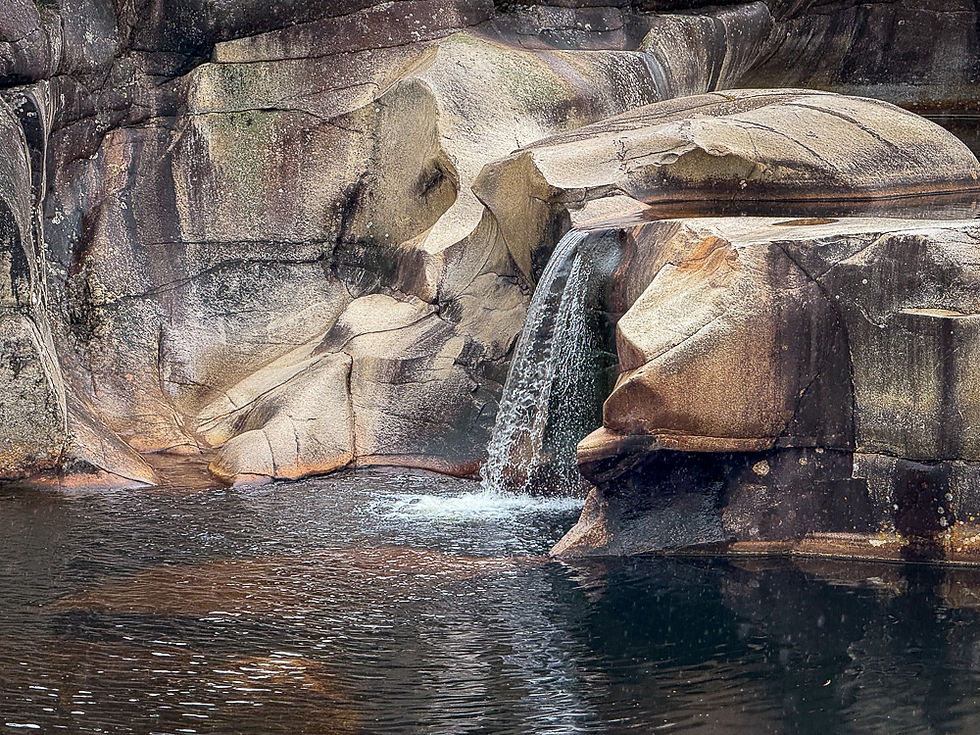
The Nissedal potholes are in a small valley in the mountains a few kilometers south of Lake Nisser, close to Hønetjønn. This beautiful natural phenomenon was created during the last ice age but was only discovered after the Fyresåna River was dammed in the 1950s. In the dried-up riverbed, both smooth-cut rocks with rounded shapes and small and large depressions emerged, which in some places were deep oblong or cylindrical holes, so-called potholes. This area is today a popular excursion destination.

It is believed that most of the natural phenomenon was created during the last ice age when rocks and gravel in the meltwater under the heavy ice had a powerful eroding effect on the hard rock. Where rocks were left to rotate, circular or oval holes formed that could be deeper than their circumference. This effect has been amplified over the thousands of years that large masses of water in the Fyresåna have set rocks and gravel in motion.

The Fyresåna River was drained in the early 1950s when the outlet from Hønetjønn was piped and the waterfalls in Dynjanfoss and Reinefoss were used to produce electricity in the Dynjanfoss power plant. When the first two turbines were put into operation in 1951, the flow in the Fyresåna River almost completely disappeared. The small amount of water that passes today is just enough to maintain the water in the pools, potholes, and small waterfalls so that you can slide down the smooth-cut rock.


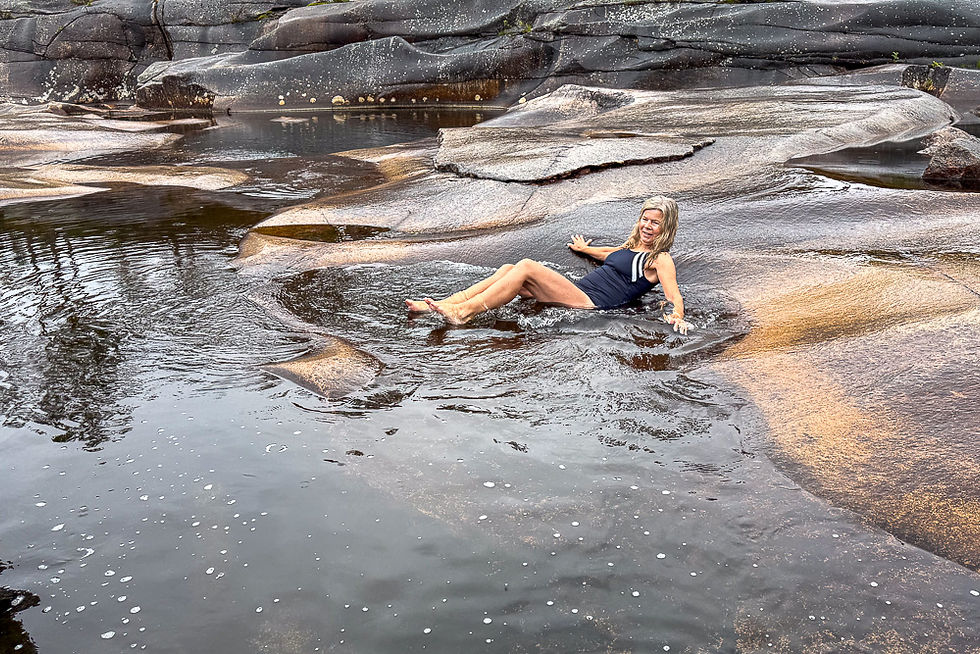
The water in the potholes and pools often remains a comfortable temperature as it is relatively shallow and there is little water exchange. However, be warned that the water flow may increase at times without any warning. Children should therefore never be allowed to play alone in this area but be prepared to get out of the riverbed if the water level starts to rise.

There is a parking lot with a toilet and information board at the entrance to the area. From here it is only a two-hundred-meter walk on a gravel road through the forest to the area with the potholes.

The first thing you come to is a small sandy beach that is suitable for small children. From there you can walk about three hundred meters along the dried-up riverbed. The most spectacular potholes can be found at the bottom of the area. It is worth walking on the left side of the river. In some places you must walk up the slope by the riverbed to get past the steepest parts. Be aware that the rock in the riverbed can be very slippery in some places, especially where it is wet.


The Nissedal potholes have been granted the status of a geological natural monument of national value. The largest potholes have a diameter of ten meters and are about the same depth. They are connected by natural slides on smooth polished rock.




More excursions: www.turideer.com
The excursion of the week: The potholes in Nissedal - Jettegrytene i Nissedal.
Suitable for: Adults and children. You can reach the first beach with a stroller or wheelchair. From here you can see some of the beautiful rock formations in the dried-up riverbed, but you don't get further down to the most spectacular area.
Getting there: Enter "Jettegrytene i Nissedal" in Google Maps. This will take you all the way to the parking lot at the entrance to the potholes. During periods of the year, the last part of the road may be closed. In that case, you must park in a large parking lot at Dynjanfoss power plant. From here, it is about 7 km to walk or cycle if you follow the road. It is also possible to walk on a path under the timber channel next to the parking lot. This path is only 2 km but is poorly marked. For safety reasons, it is not allowed to walk on the timber channel, which is a cultural monument from our recent past. It was in use until the 1970s.


Comments