


Museo Delso in Alfaz del Pi on the Costa Blanca - paintings, sculptures and art installations - outdoor and indoor museum

The artist Pedro Delso Rupérez lived in a villa in Alfaz del Pi for the last years of his life. There he designed both the house and the studio as architectural works of art. In addition, he decorated the large property with sculptures, art installations and small, strange buildings. Inspired by Miguel de Cervantes' novel about Don Quixote de la Mancha, he built his own windmill which was used as a guest room, but also as an exhibition space for art. It is a great experience to see the place and the art.

Pedro Delso Rupérez - best known as Pedro Delso - is considered the creator of triangulism, an art style in which figures and other elements are shaped like triangles. Delso was inspired by and collaborated for a period with Pablo Picasso, who created the style of cubism in which the cube shape is central. Delso believed that the great things in life consisted of triangles, such as the Holy Trinity and the three elements of earth, air and water. He brought this into his art, and triangles are an important part of his work.

Delso is perhaps best known in Barcelona and Spain, but his works can be found in many places around the world. At one point he was compared not only to Picasso, but also to the two great Spanish frontmen of modernism, Joan Miró and Salvador Dalí. However, he did not reach their popularity, and triangulism was not followed up to a large extent by others. Today his works can be bought relatively cheaply at art auctions, but in his heyday, he received important decorative commissions and much honorable mention.
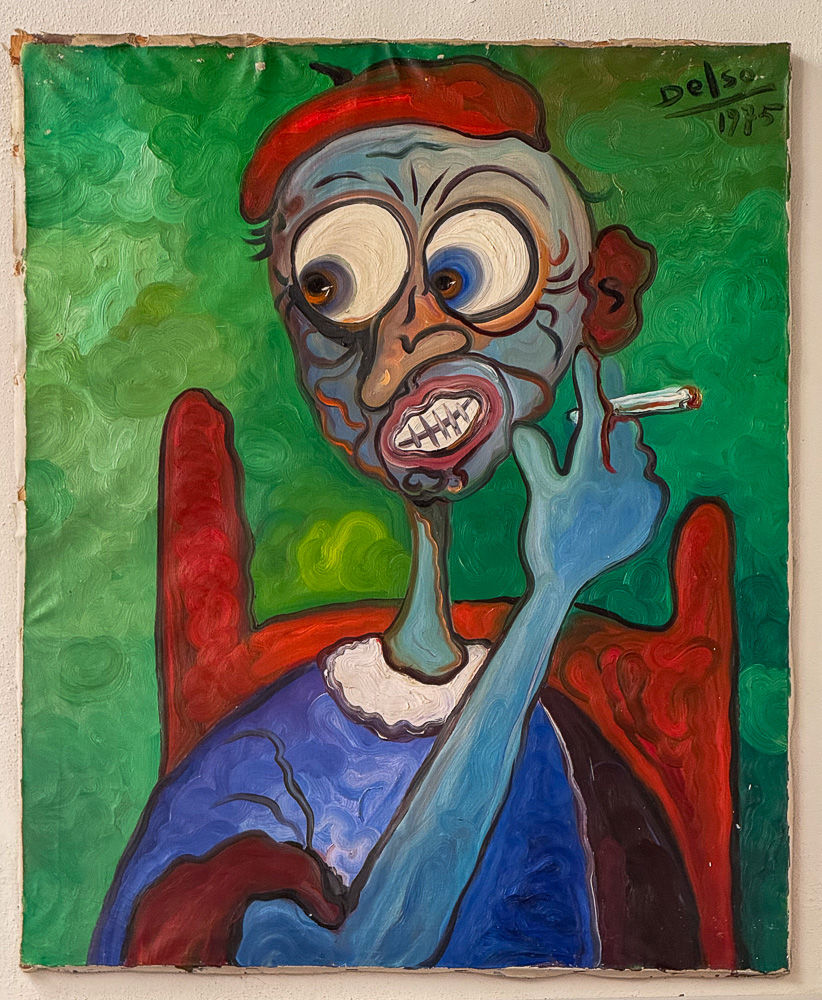
Delso was born (August 28, 1924) and grew up in the north of Spain in the small town of San Esteban de Gormaz. He showed both skills and interest in art early on. At the age of four he won a drawing competition, and at the age of ten he was part of a group of artists who were restoring paintings in a chapel near where he lived. His talent was noticed, and it ended up that the county authorities offered him an art scholarship to study at the Bellas Artes art academy in Madrid. This was not allowed by his parents who insisted that he get an education. The compromise was that he could start at the School of Arts and Crafts in Soria if he also took his art exam.

However, he quickly grew tired of his bookish studies, and at the age of 15 he ran away from home to Barcelona, where he entered the Royal Academy of Fine Arts. He not only did well in his art studies, but also managed to make a living by selling his art. After two years, he received a scholarship to study further in Paris, where he met Pablo Picasso. In the years that followed, he was in Paris several times, but also traveled to Latin America and Africa to seek inspiration. After a few years, he got his own studio in Barcelona and learned to work with ceramics and iron. He had great success decorating a restaurant that he and his brother established in Barcelona, and eventually received many decorating assignments at restaurants and hotels in Barcelona and Paris.

In 1967, a new line of the Barcelona Metro was opened. Pedro Delso won the competition to decorate some of the stations. It became so popular that he was commissioned to decorate all the other stations as well. He is best known in Barcelona, where you can still see his art in the metro stations. It is mainly mosaics, but also some iron sculptures.

After a long period in Barcelona, he set off on a journey to Africa. On the way, he stopped in Villajoyosa, and was so well received there that he stayed. He was commissioned to create decorations for the Solgården that had just been established, and when he was to deliver some paintings in 1972, he met the young Norwegian nurse Signe Aasen. She was captivated by his beautiful, soft voice, his charm and friendliness, and the many interesting philosophical conversations they had. They therefore quickly became a couple, and she gave up her professional career to be an artist's wife full-time. Gradually, they began to look for a permanent place to live. In 1976, Delso had found a plot of 15 acres with a magnificent view from a hill above Alfaz del Pi, which they decided to buy. On it, they had a large detached house and a studio built according to Delso's drawings. The buildings were completed in 1978, and they lived there for the last years of Delso's life until his death in 1994.


Signe has stated that it was not always easy to live with an artist. Pedro Delso was extremely productive and left behind a large output. He worked practically all day. In the morning and afternoon he worked on sculptures and paintings downstairs in his studio. In the evening he drew or painted small watercolors upstairs in the villa while Signe did needlework. They rarely argued, and when there was an occasion for it, she simply withdrew under the slogan that it takes two to argue. Once when they disagreed about a job the craftsmen should do, she chose to spend the night in one of the small houses on the property. Then he became deeply unhappy and brought her perfume. But Pedro was a kind and thoughtful man and their life together was mostly both inspiring and rewarding. They also had time for friends and often invited them to big parties.
Delso was inspired by Miguel de Cervantes' book about Don Quixote de la Mancha. He built his own windmill on the property which was used as a guest room and exhibition space for art depicting Don Quixote in various situations.


After Pedro Delso's death, Signe opened the property so that everyone could enjoy Delso's art. She lived there for almost 30 years until she finally had to move to a nursing home. During all these years, she sold paintings and drawings that Delso had produced. However, there are still many left. After Signe moved out, a friends' association took over the responsibility of maintaining the property and keeping it open to the public. Below are several pictures of his art.


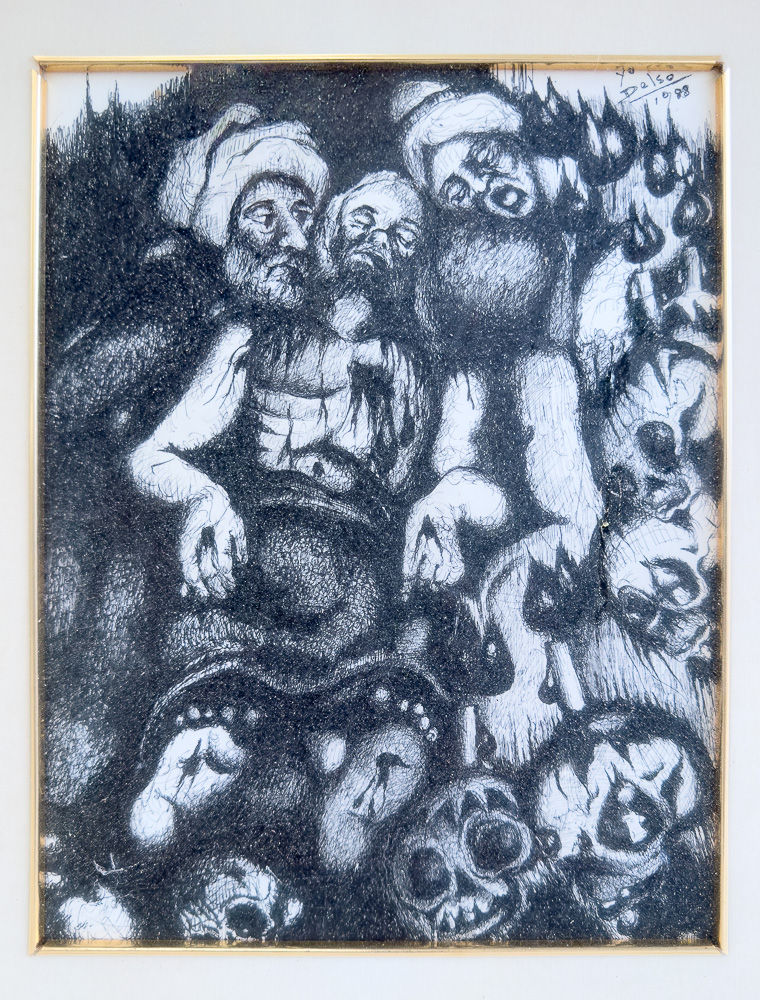


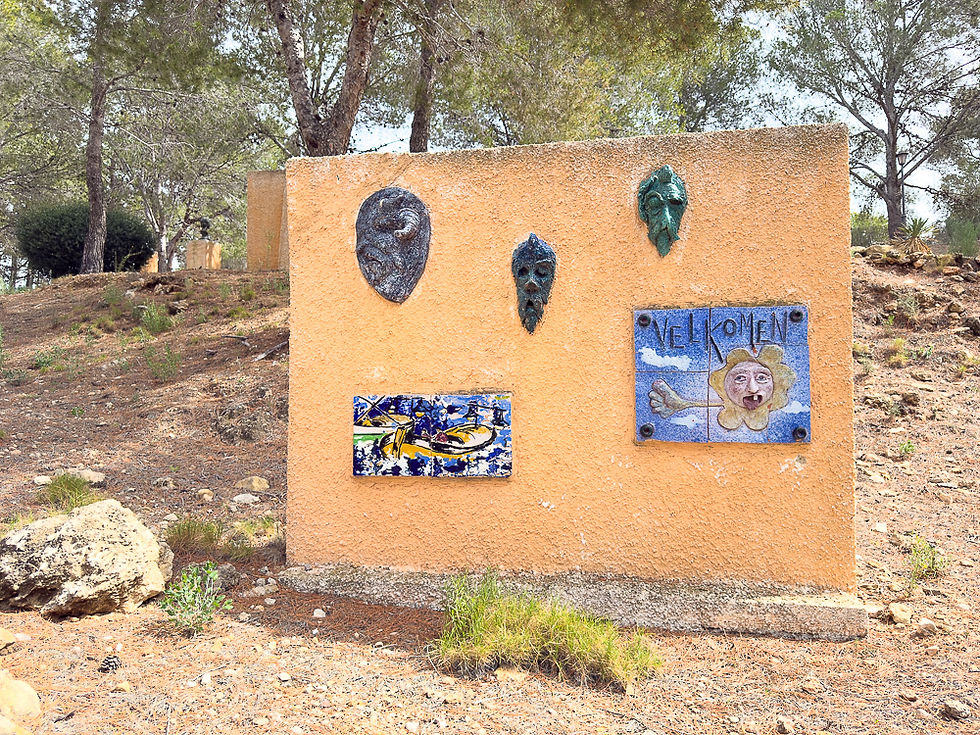


The Friends' Association, which mostly consists of Norwegian pensioners, has put in a lot of work over several years to make the museum accessible, but has realized that it will not be able to be responsible for Delso's art and property permanently. The widow has wanted to donate the property with the art to the municipality in exchange for it taking responsibility for keeping it open as a museum. This should be a good deal for the municipality, but it has taken time to reach a decision. Hopefully, this will be successful soon so that the museum can have fixed opening hours. Currently, the museum is mostly only open by appointment.
The content of the article is based on conversations with the Friends' Association, interviews that Signe Aasen has given in various contexts and information on the museum's website.
Attraction of the week: Museo Delso in Alfaz del Pi on the Costa Blanca
Opening hours: No fixed hours. Send an email to museodelso@gmail.com to make an appointment. For more information see: https://www.museodelso.com.
Getting there: The museum is located in Carrer Topazi, Alfaz del Pi on the Costa Blanca. Type "Museo Delso" into Google Maps and you'll be taken straight to the main entrance.


Comments