


Helleren in Jøssingfjord - spectacular settlement under a mountain shelf

The cave at the very end of Jøssinfjord is one of Norway's most distinctive cultural monuments. It consists of two old wooden houses that were built in the 18th and early 19th centuries under a 60-meter-long and 10-meter-deep rock outcrop. Archaeological remains from settlements dating back six thousand years have also been found here. The site has a large parking lot, a science center with a café, and a picnic area with benches and tables. It is a popular place to stop on the Åna-Sira road between Flekkefjord and Egersund.
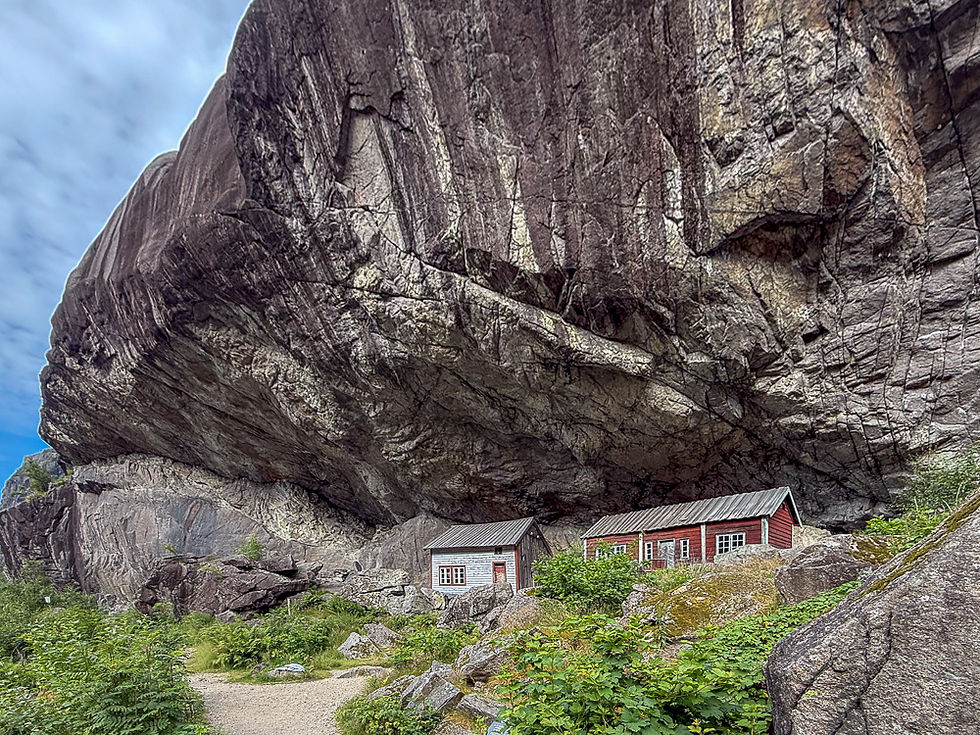
Originally, there was an entire farm here with three farmhouses and several outbuildings such as barns, outbuildings and boats. But even though only these two houses are now preserved, there is reliable information that people have lived here since the 17th century. Those who lived here made a living from both farming and fishing. They paid an annual building fee to the Haneberg farm. The last user was Ingeborg Elisebeth Jakobsdatter, described as "a farmer and a widower". She sold the right of use to the farm in 1909 to The Jøssingfjord Manufacturing Company. Shortly after this, the place was vacated for good.

At one time, as many as 15 people lived on this farm under Helleren. The census from 1865 shows that the following people lived in the three farmhouses that stood there at that time. In one house, Jakob Jakobsen lived with his wife and seven children. In the second, Ole Andreas Aslaksen lived with his wife, son and maid. In the third, Johannes Larsen lived with his wife. All of them lived from farming and fishing.
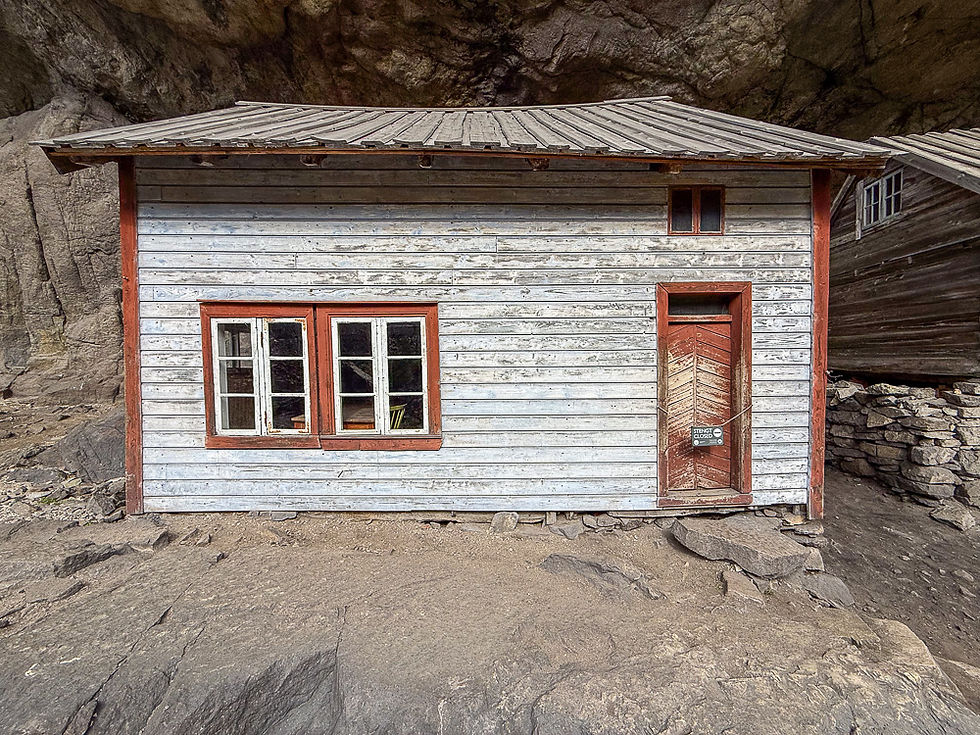
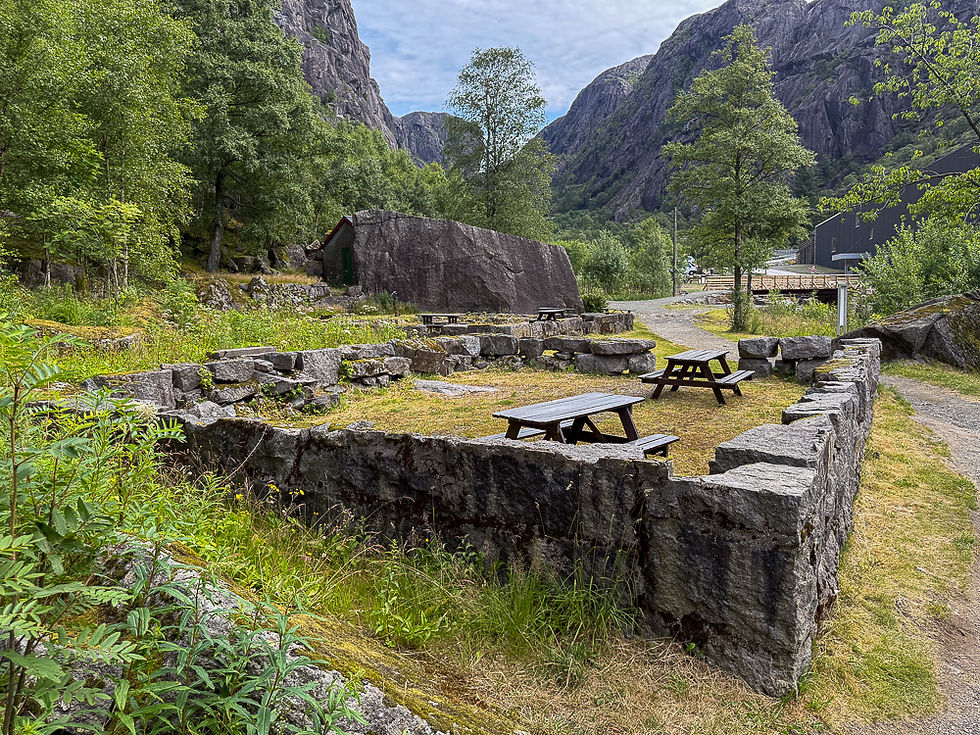

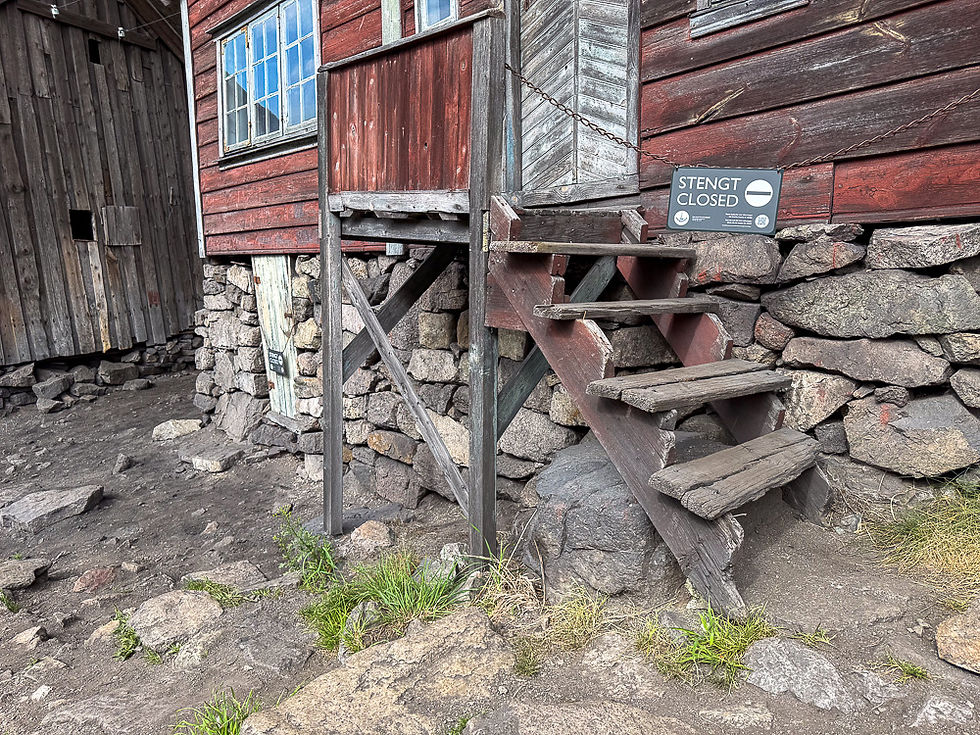
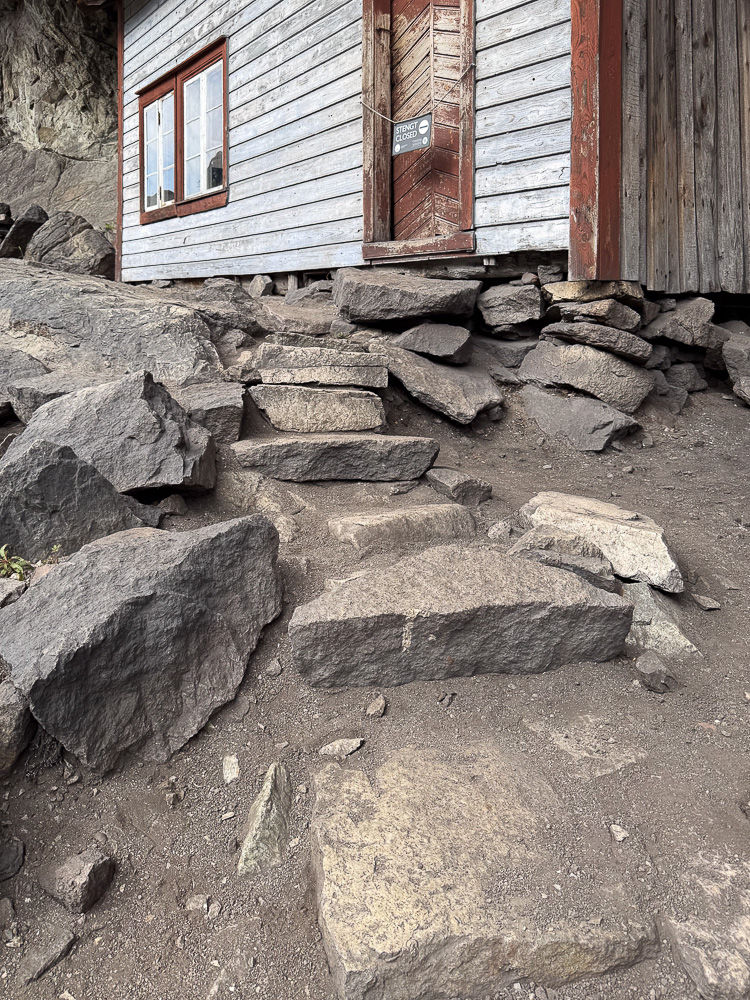
Helleren has been a popular tourist attraction in southwest Norway for several years. A few years ago it was possible to go inside the wooden houses to get a picture of what it must have been like to live there, but since there were about fifty thousand visitors a year, the wear and tear became too great. The entrance doors are therefore closed, and one has to be content with looking at the houses from the outside. A drying rack has been set up to show how they dried their clothes, and a bucket by the spring where they could collect clean drinking water.
Back to the picturesque image of Helleren. In tourist brochures and social media posts, you often see a section of the houses and the impressive cliff above them, such as in the picture below. But that's not the whole story. If you turn the perspective a little, you see fill and industrial activity on the other side of the river. This comes from the mining at Tellnes, which is one of the world's largest ilmenite mines operated by Titania AS. It has existed since the 1960s and has been of great importance for jobs and the economy in the Dalane region. The open pit mine and the shipping facility are located here by the Jøssingfjord, and the interventions are therefore very visible from Helleren.


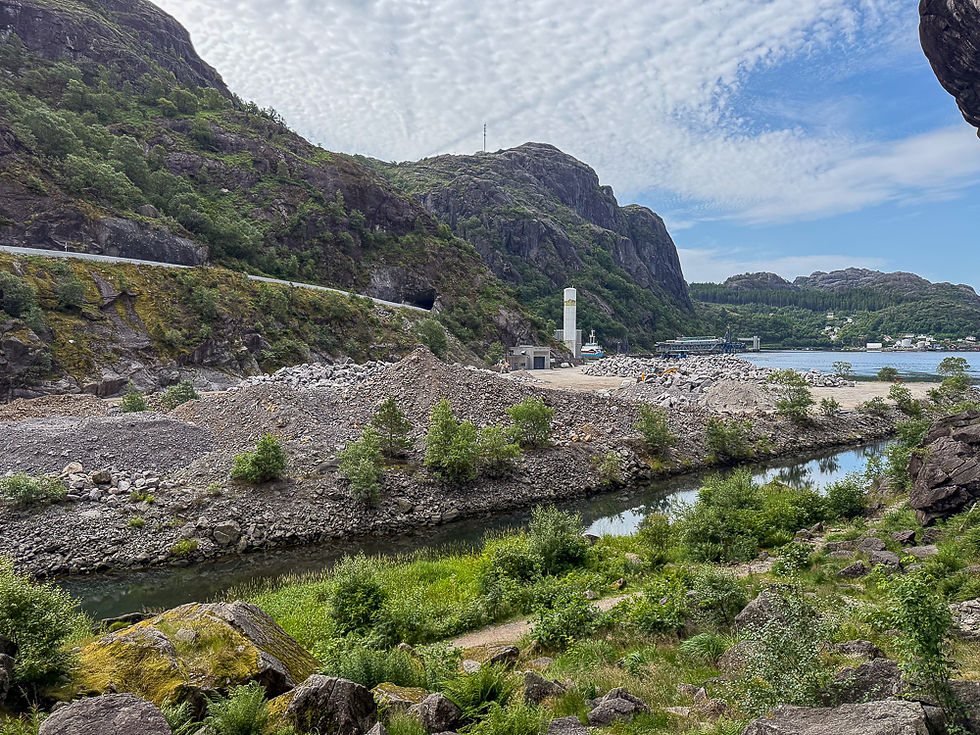
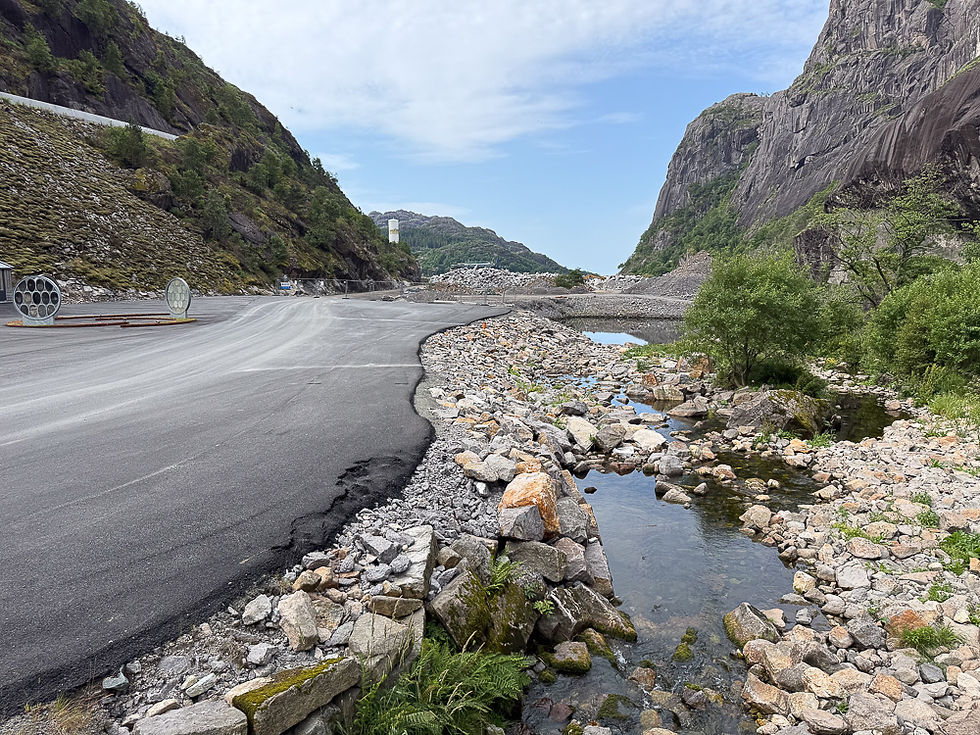
However, it must also be said that it was the mining company Titania that helped preserve the cultural heritage. The company owned the area for many years and transferred Helleren to the Dalane Folkemuseum in 2001, so that the site could be managed as a cultural heritage for the public. Visually, however, the contrast between the two sides of the river is great. Many would see this as a disadvantage, but it can also be argued that the contrast is interesting because it highlights two historical eras side by side.
More excursions: www.turideer.com
Excursion of the week: Helleren in Jøssingfjord on the Åna-Sira road
Finding it: When you drive on the Åna-Sira-Veien between Flekkefjord and Egersund, there are signs to Helleren at the innermost part of the Jøssingfjord. There is a spacious parking lot, and from 11 am to 5 pm every day there is an open café at the Science Museum.

Comments