


Dénia - The old town and the castle - what to see in Dénia

Close to the characteristic mountain El Montgó lies the coastal town of Dénia with its iconic medieval castle clearly visible on top of a hill near the port. Dénia has always been a hub for trade in the Mediterranean, and today it is an important port for ferry traffic to the Balearic Islands. It is also a popular place for tourists who appreciate the good food, the long sandy beach and the nice walks. This article describes what you can see in Dénia.

If you want to visit Dénia and see as much as possible in the shortest possible time, you should park in the large car park on the east side of the port. From there, you are within walking distance of both Castillo de Dénia, the old town, Placa de la Constitución and the beach. This article describes:
Castillo de Dénia
The tunnel under the castle
Placa de la Constitución
The old town
Hiking in the surrounding area

Castillo de Dénia
The large castle on top of the hill La Colina de Castillo (Castle Hill) right next to the port was built by the Moors in the Middle Ages in the 11th and 12th centuries. The castle hill is 60 meters high and is considered the city's acropolis and the historical center where people settled from the beginning. The hill has been used as a fortified area since Roman times.
Since Dénia was an important port, the fortress was placed right next to the port in order to effectively protect it from pirates. The central part of the castle (the top hill) was used as the residence of the emir (later the governor). During the Moorish era, Dénia was an independent state, a taifa kingdom. The residence was surrounded by a military garrison, and there was also an area set aside within the walls where parts of the civilian population could seek refuge during an attack on the city, la Vila Vella. In 1859, the Spanish authorities decided that the castle should be vacated and demolished. It was a strategic move that was carried out with many castles and fortresses along the coast because they wanted to prevent such fortifications from falling into the hands of enemies. However, the castle was not completely demolished, but vacated and sold to private individuals who used it for wine and almond cultivation. It was also so damaged by previous hostilities that it was unsuitable as a military fortress. In 1952, after almost 100 years, the Spanish state bought the castle back. Since then, restoration work and archaeological excavations have been carried out that have provided insight into what life was like in this large fortress.


The tunnel under the castle
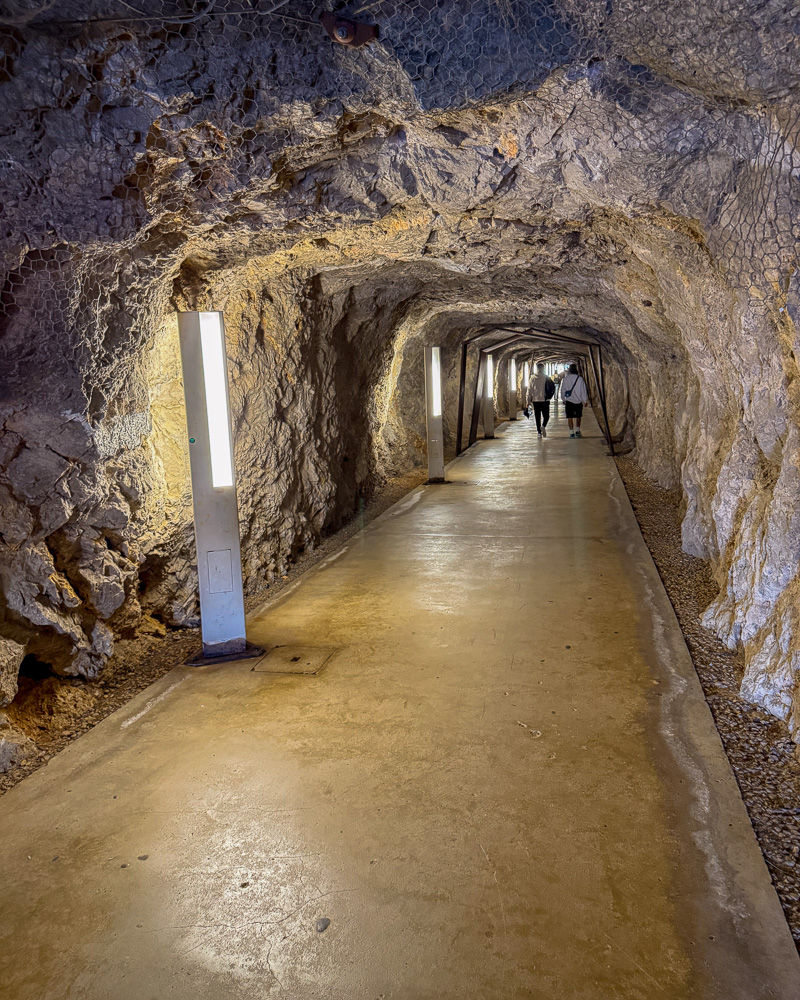
In 1937, during the Spanish Civil War, a tunnel was built under the Castillo de Dénia, starting at the back of the castle and coming out at the front at Placa de la Constitución, where the town hall is located. This tunnel was used as a shelter during the war, but is now used as a convenient passage from one side of the city to the other. It is also used for temporary art exhibitions. The art is displayed on iron mounting boards at intervals of a few meters throughout the tunnel. Since the exhibitions are temporary and there can be long breaks between each exhibition, you may not see it when visiting the city, but it is worth going through the tunnel anyway.



Placa de la Constitución
The Town Hall Square is located in the center of Dénia. It is one of the famous places in Dénia and a good starting point for seeing both the castle and parts of the old town. There is the stately town hall Ayuntamiento de Dénia and the beautiful church Iglesia de Nuestra Señora de la Asunción. The square is also a hub for important streets such as Calle la Mar which goes down to the port, Calle Loreto which is known for its many restaurants and Calle Cop which is one of the best shopping streets in the city. On the upper side of the square you enter directly into part of the old town.


The old town
The historic center of Dénia has unfortunately not been preserved in its entirety, but there are two areas where the original street structure and many of the houses have been preserved. One is near the town hall square and the other down in the port area. On the upper side of Placa de la Constitución is the Les Roques area with picturesque streets such as Carrer Sant Francesc, Carrer del Salt, Carrer Olivera, and Pujada al Castell. On the lower side is Calle Loreto, which is a historically restored street that is quite touristy with numerous restaurants, and Calle Major, which is a narrow street with many original houses.
The area near the port is called Baix la Mar. It is the most authentic part of the old town. There you will find old, stone houses and narrow streets. The houses are well maintained and painted in beautiful colors. Here too there are many restaurants and bars where you can sit down and enjoy the atmosphere. Carrer Santíssima Trinitat and Carrer Pont are nice streets to walk in. Calle Loreto also leads down to this area. But here you don't really need a map. You just have to go exploring. Below are pictures from the two parts of the old town.


Hikes and nature
Dénia has 20 km of coastline and has many kilometers of sandy beaches northwest of the city in the area of Les Marines. The first of these, Punto del Raset, is 600 meters long and is located right next to the port. After this, there are five more long beaches with lengths varying from one to three kilometers.
On the southwest side, it borders the El Montgó nature reserve where the characteristic El Montgó mountain sits like a sleeping elephant with its trunk out into the sea. That is why the mountain is also called the "Elephant Mountain". In this nature reserve, several marked trails of varying lengths and difficulty have been created. It is possible to climb the highest peak of the mountain, but there are also less demanding routes over the "trunk". Below you will find descriptions of a couple of these.
More excursions: www.turideer.com
Excursion of the week: Explore what to see in Dénia.
Suitable for: The whole family
Getting there: Dénia is located on the E-15 a few miles north of Alicante and Benidorm. Type "Parking El Raset" into Google Maps. This will take you straight to the large parking lot right outside the harbor. It's not a good idea to try to find parking in the center itself, but you're within walking distance of most things from the parking lot by the harbor. From there, it's also easy to get to the beach. If you want to stay overnight, it might be worth choosing a hotel near the harbor, such as Hotel El Raset or Hotel la Posada del Mar.


Comments